Can I Change the Link of a Static QR Code After Printing? (The Dynamic Truth)
This is one of the most frequently asked questions in the world of print marketing. You've printed 5,000 flyers, and realized the URL linked to your QR code is wrong, or the promotion has expired. Can you update the destination without reprinting everything? The short answer depends entirely on the type of QR code you generated: **Static** or **Dynamic**.
The Hard Truth: You absolutely **cannot change the destination URL** embedded within a static QR code once it has been printed. That code is permanent, and changing the link requires generating and printing a brand new code.
Static QR Codes: The Permanent Link
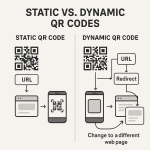
A **Static QR Code** contains the destination URL encoded directly into its pattern. Think of it like hardcoding an address into a piece of physical circuitry. When a scanner reads the code, it reads the URL directly.
How Static Codes Work
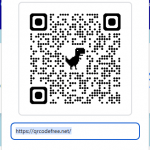
The pattern of squares and dots (the modules) that make up a static code mathematically represent the characters of your URL. For example, the pattern for "qrcodefree.net" is permanently etched into the image you downloaded. If you change the URL to "newpromos.net", the code's pattern must also change completely.
Why Static Codes are Free: Static codes require zero ongoing service, tracking, or hosting. They are a one-time creation, making them ideal for permanent, unchanging data like a link to your homepage or simple text, but completely inflexible for marketing campaigns.
When to Use a Static Code
Despite their inflexibility, static QR codes have their uses, specifically when the data is guaranteed never to change:
- Linking to your company's main, permanent domain (e.g., the URL on a building sign).
- Embedding a small piece of **plain text** or a number (e.g., a serial number).
- Creating a one-time use code for a short-term, low-stakes event.
The destination link is encoded directly into the squares of a static QR code, making it unchangeable after printing.
Dynamic QR Codes: The Essential Solution for Marketers
If you need the flexibility to change the destination URL at any point after the code has been printed, you must use a **Dynamic QR Code**.
How Dynamic Codes Work
A dynamic QR code does not contain your final destination URL. Instead, it contains a short, unique redirection link that points to a server hosted by your QR code generator (e.g., `qrcodefree.net/r/xyz123`).
- **The Print:** The code pattern on your flyer permanently stores the short, unique server URL (`/r/xyz123`).
- **The Scan:** A user scans the code, and their phone is redirected to the generator's server.
- **The Server:** The server looks up the code's ID (`xyz123`) in its database and sends the user to the current, correct destination (e.g., your new landing page).
This means you can log into your dashboard at any time and change the final destination link in the database, while the printed code (which points only to the server) **remains the same**.
The Hidden Benefits of Dynamic Codes
The primary value of dynamic codes is flexibility, but they offer crucial secondary benefits:
- **Tracking:** Dynamic codes track every scan: when, where, and how many times your code was scanned. This is invaluable data for measuring campaign success.
- **Error Correction:** If you accidentally input the wrong final link, you can fix it instantly without incurring massive printing costs.
- **Longevity:** You can reuse the same printed code for different campaigns over months or years.
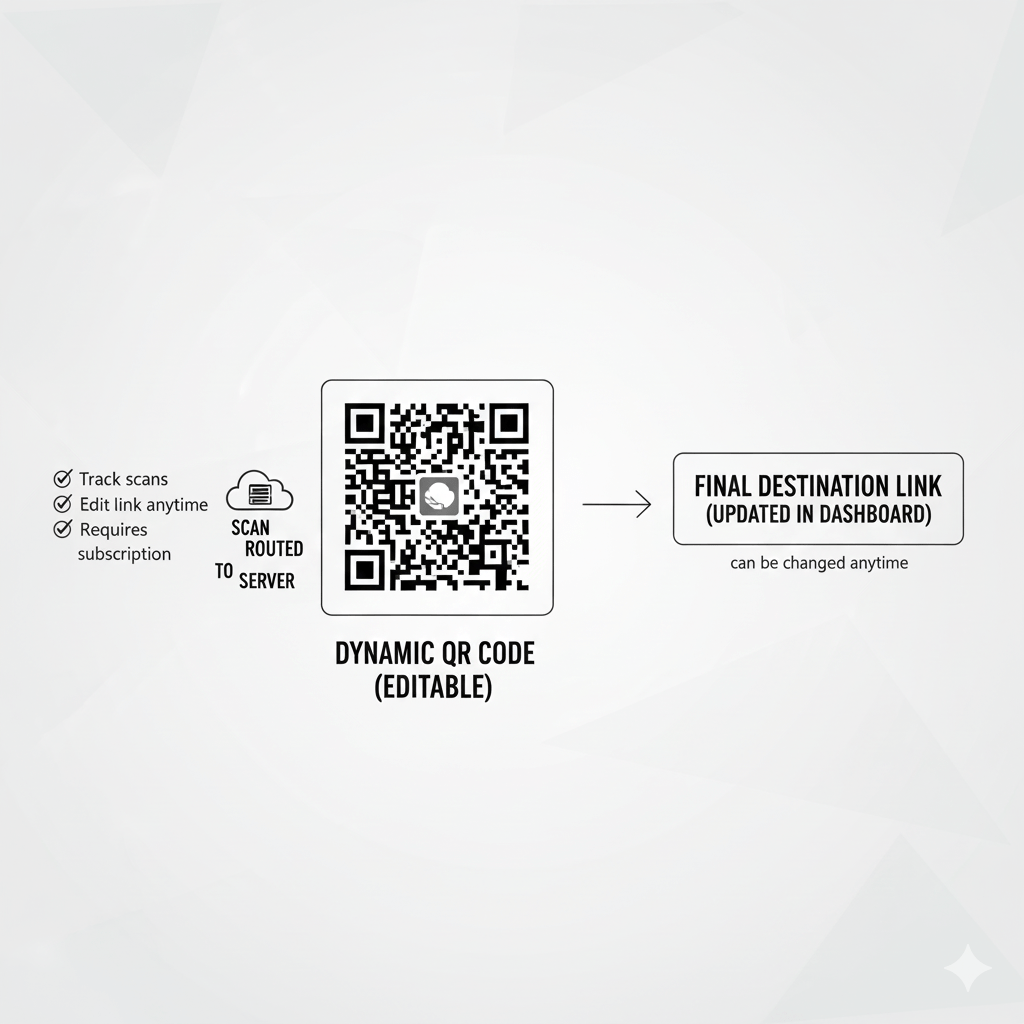
Dynamic codes route the scan through a server, allowing the final destination URL to be updated instantly without changing the printed code.
The Cost of Inflexibility vs. Dynamic Costs
Many users default to free static codes to avoid the subscription cost associated with dynamic codes. However, consider the true cost of static code failure:
Cost of Static Failure: If you print 10,000 business cards and the link breaks, the cost of reprinting the entire batch far outweighs the monthly fee for a dynamic QR code service. Dynamic codes are an essential insurance policy for any long-term or high-volume print material.
When choosing, think long-term: if the destination of the link has any chance of changing (e.g., promotions, seasonal menus, event tickets, landing pages), **always choose dynamic.** If the link is permanent (like linking to a downloadable PDF guide that will never be updated), a static code is fine.
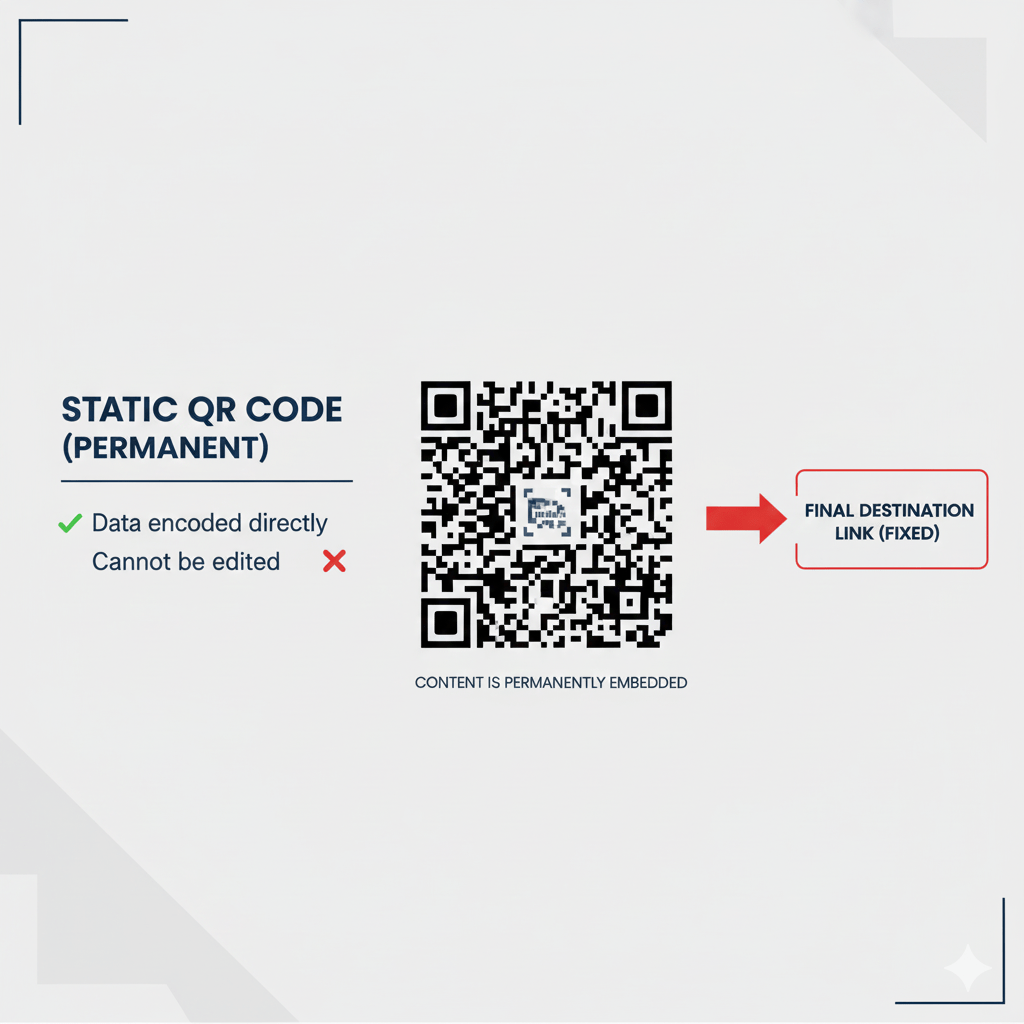
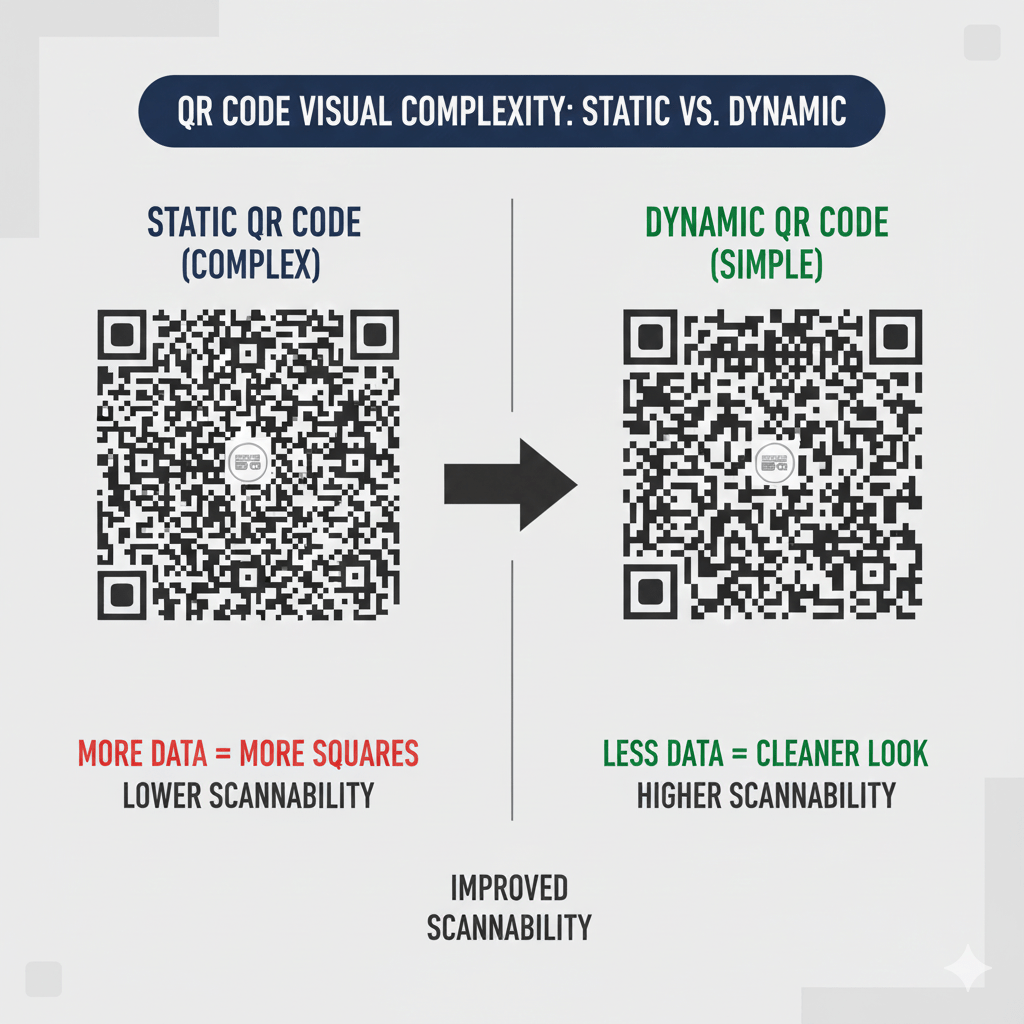
Dynamic codes are often visually simpler than static codes because they only encode a short redirection URL, improving scannability.